
Today, buyers assess properties in a different way than they may have done many years ago, and energy performance has become an important part of that process. This is a notable shift in a market that historically priced properties on position and rarity alone. A property’s DPE rating now influences how buyers assess overall value, including what they’re willing to pay and how much investment will be needed post-purchase.
The DPE applies to all properties across France, not just ones in particular regions. However, the Côte d’Azur holds a large volume of period and older properties, which is where the weakest ratings are concentrated, making energy performance a more pressing issue here than in newer markets. As a result, energy performance has a particularly important influence on how French Riviera buyers evaluate, negotiate and plan for the future of their property.
Today we will explain how DPE ratings work in France and why they matter when buying French Riviera property. We’ll discuss assessing a property’s value and renovation requirements, as well as understanding new rental restrictions.

Table of Contents
What Is a DPE Rating and Why Does It Matter More in 2026?
The Diagnostic de Performance Energétique (DPE) is a mandatory energy performance diagnostic test and survey that’s provided when a property is sold in France. A COFRAC-certified surveyor will issue the DPE, and it’s valid for 10 years.
Note that DPEs from before July 1, 2021, are no longer valid and must be reissued. This is because the guidelines for DPEs changed in early July 2021, requiring the survey to now show a precise energy and climate class. Additionally, the DPE became legally enforceable at that point, which means that a buyer can hold the owner liable if there’s an error in the diagnosis.
Broadly, these changes mean that what was once a disclosure formality is now a required factor that affects how much a buyer will pay.
How the DPE Rating Scale Works
DPE takes into account both energy consumption and greenhouse gas emissions, with the lower of the two determining the final grade. DPE is based on an A to G scale, with each letter indicating the energy efficiency of the property.
- A and B ratings are typically given to new-build properties or homes that have undergone complete thermal renovations. These ratings reflect high energy efficiency.
- C and D ratings are the market standard for older, well-maintained homes.
- E, F and G grades are given to high-risk properties that lose heat quickly through the roof, walls or windows.
The letter grade a property is given doesn’t just tell a buyer what to expect in terms of energy efficiency. It will also have a large impact on its market value:
- An A- or B-rated home can command between 10% and 17% more than less-efficient properties.
- A C- or D-rated home will maintain the baseline market value.
- For an E-rated home, minor price negotiations of approximately 5% are common.
- For an F- or G-rated home, price discounts commonly range from 15% to 25%.
While DPE rules are standard across France, the market response varies. Buyers should also consider whether any price reduction for a low-rated property is sufficient to offset the cost of necessary renovations.
Where Luxury Properties Typically Sit On the Scale
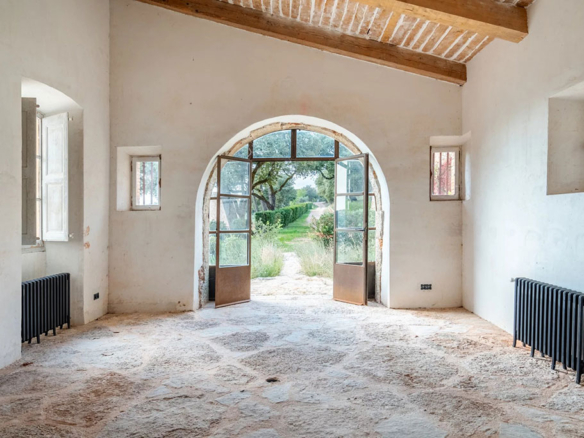
The relationship between DPE ratings and property value is especially relevant when considering the French Riviera’s older stock, as these properties skew toward the lower DPE bands. This includes Belle Époque villas, period apartments, and large homes with single glazing and original features. Contemporary architect-designed villas, on the other hand, frequently achieve A or B ratings.
How DPE Ratings Affect French Riviera Property Prices
DPE rating isn’t a standalone technical issue. Instead, alongside a property’s condition, position, and sea views, it’s another factor that can influence French Riviera property prices. Weak ratings lengthen a property’s time on the market and create room for negotiations. Strong ratings support the property’s asking price.
Why the Impact Varies Across the Riviera
In the French Riviera, buyer profile differs by micro-market. A trophy estate on the waterfront is purchased for its rarity and position. A family villa in the hills above Villefranche-sur-Mer, however, is bought partly for its running costs. At the very top of the market, the DPE rating is a matter of factoring it into the renovation budget; it’s typically not a deal-breaker, though.
What a Poor DPE Rating Actually Costs to Fix
The categories of work that DPE ratings span include heating and cooling systems, insulation, glazing, and ventilation. A lower DPE rating can signal higher future energy costs as well as significant renovation expenses to improve the home’s efficiency. Cost varies enormously in period and protected buildings, and co-ownership adds another layer for apartments.
On the French Riviera, planning and heritage constraints may limit what an owner is permitted to change, especially for period properties and homes in protected areas. These restrictions can impact the cost, scope and timeline of renovations, which is why it’s important to understand applicable rules before making a purchase.
Additional regulatory constraints that buyers should factor in include restrictions on renting out low-rated properties. Currently, properties that are rated G cannot be newly rented. In January 2028, the same will apply to F-grade homes, and in January 2034, it will apply to E-grade homes. Note that these bans do not apply to lease agreements that were signed or renewed before January 2025.
How To Read a DPE Rating During a Property Search
The DPE is required before a property is listed for sale, and it should be provided in the property listing itself. The certificate also has to be provided at the contract signing. Buyers should review the document early in the search process, as it can highlight potential renovation needs and costs before they make an offer. Here’s what to assess:
- Check the issue date
- Check if the rating was produced under the current methodology
- Read the recommendations page in addition to the letter rating
Common traps to avoid include trusting a rating that’s been carried over from a previous sale or a rating that was issued before the property underwent renovations.
Using the DPE Rating as a Negotiation Point
An informed buyer can use a weak DPE to their advantage by obtaining quotes for the necessary renovations and leveraging those costs to revise the offer. Working with an expert who has local knowledge also helps, since the cost of upgrading a specific property can change significantly based on location. Overall, having documented estimates gives the buyer a strong basis for negotiations rather than relying on the DPE rating alone.
The buyer’s agent can add further value during the due diligence phase by coordinating specialist reports and helping the buyer assess the home’s renovation requirements, potential costs, and local restraints. In France, the fee for the buyer’s agent is paid out of the selling agent’s commission, so the buyer won’t incur a separate fee for this level of representation and guidance.
Final Thoughts
A weak DPE rating is a factor to be priced into a purchase, but it doesn’t automatically mean that a property needs to be avoided — some of the most compelling period properties on the Riviera carry poor ratings. The key question is what the necessary renovation work will cost and if that cost is reflected in the asking price.
Conversely, a strong rating on a well-positioned property can support its asking price and leave less room for negotiation.
Along with your buyer’s agent, assess the true cost of upgrading a specific property, taking into account building characteristics, heritage constraints and location.
Are you looking for a French Riviera property that balances character, location and long-term value? If so, Home Hunts can help you assess DPE, renovation requirements and other investment considerations before you make an offer. Contact Home Hunts to discuss your requirements and start your property search.